

The 40% Question
Loyalty is not a strategy; it is a comfort mechanism that often comes at a high cost.
Why do we keep allocating 40% of our budget to partner loyalty when a data-driven global vetting process could reclaim these funds? While the relationship and history are meaningful, loyalty should be continually earned — not assumed.
The Invoice Nobody Audits
You have worked with them for three years. They understand your brand, your team, and your processes. However, they are delivering only 60% of what a new vetting process could achieve — while costing 40% more.[1]
The relationship isn't the problem. The assumption that the relationship earns immunity from performance review — that's the problem.
Loyalty should be earned based on current performance, not carried forward from a past that is no longer relevant.[1]

How Loyalty Becomes a Budget Line
The process begins logically: you find a capable partner, build a relationship, and invest in it because collaboration typically becomes more efficient over time.[2]
Eventually, performance plateaus, the market evolves, and better options appear. Yet the relationship becomes entrenched, making it difficult to question or replace without feeling disloyal.[2]
At this stage, the loyalty premium is no longer an investment in the relationship. It becomes a comfort tax — where you pay extra for the convenience of avoiding change rather than for improved performance.[5]

What a Data-Driven Vetting Process Actually Looks Like
A global vetting process does not undermine existing relationships; it serves as a benchmark. It determines whether the loyalty premium is justified — and if so, provides data to support it.[3]
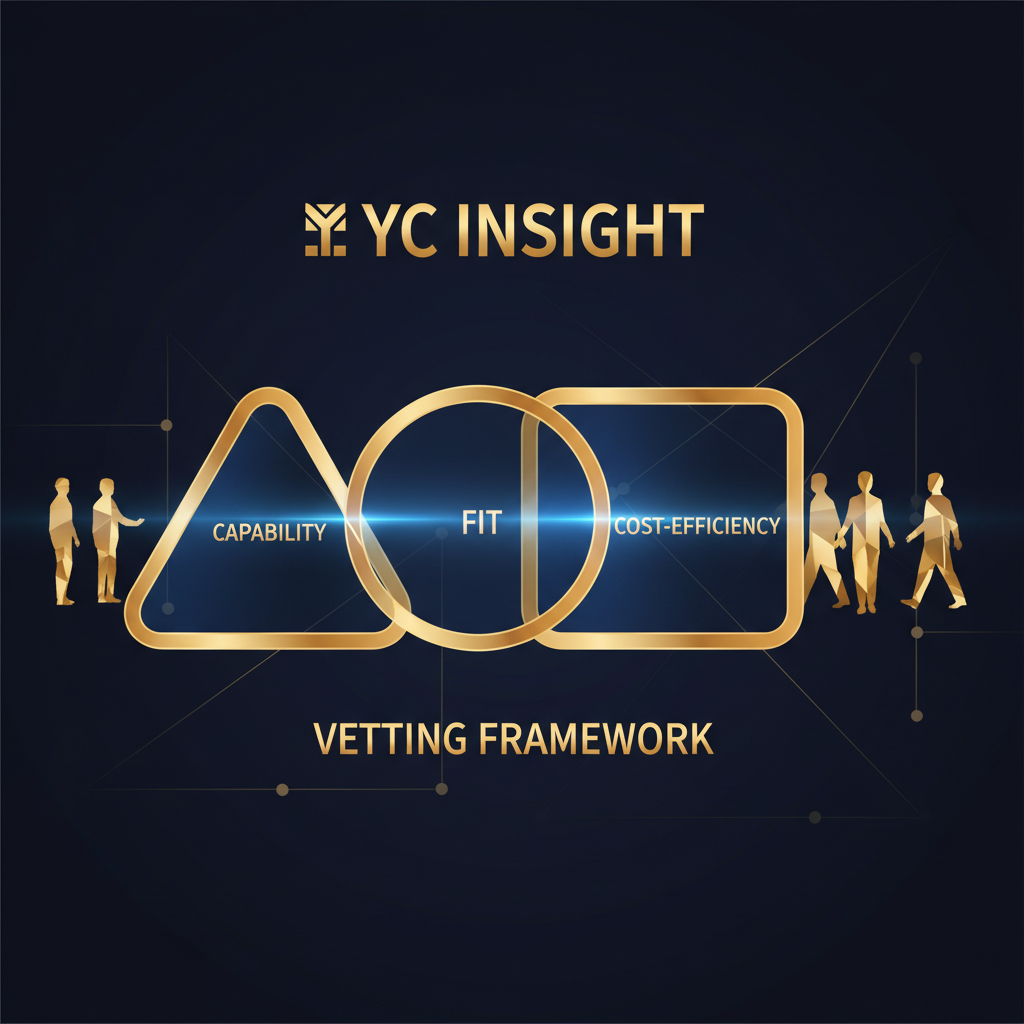
The process evaluates three areas: capability (demonstrated skills and results), fit (performance within your specific context), and cost-efficiency (actual cost per unit of output, benchmarked globally). KPIs such as delivery time, accuracy, cost per deliverable, client satisfaction, and speed of issue resolution make it possible to assess and compare partners objectively.[3]
Most organisations conduct this process only at the start of a relationship. Those that reclaim the 40% do so continuously — not to replace partners, but to ensure ongoing accountability. The most effective cadence is typically annually or biannually, depending on the complexity and impact of the partnership.[4]
The Personal Version of This Question
In astrology, Venus governs what we value — and how we assign worth. A Venus pattern that seeks comfort over clarity will keep renewing the same contracts, the same relationships, the same self-image, long after the return has diminished. Not out of love. Out of familiarity.
The 40% question, in its personal form, is this: where are you paying a loyalty premium on something that stopped earning it? The friendship maintained out of history rather than genuine nourishment. The self-narrative you perform because you have been performing it so long it feels like identity.
The key question is not whether the relationship has value. It is whether you measure that value — or merely assume it. Loyalty earned in the present tense is the only kind worth paying for.

Three Questions Worth Sitting With
Which of your current partnerships has never been benchmarked against the global market?
If you ran a vetting process today, would your current partners win it?
Where in your life are you paying loyalty tax on something that stopped earning it?
The Emperor's Shadow
The Emperor builds systems and creates order from chaos. This is his strength. His shadow, however, is mistaking loyalty for strategy — retaining outdated teams, agencies, or processes because change feels like a betrayal of what was built. The Emperor who cannot audit his own table is not governing. He is preserving.
Consider a major consumer goods company that worked with the same regional marketing agency for over a decade. Despite declining campaign returns and rising costs, leadership hesitated to seek alternatives out of deference to years of collaboration. Only after a global benchmarking review revealed that newer agencies delivered stronger results for 30% less did the company switch — freeing up budget and reigniting growth.[5]
Real authority knows when to rebuild the table. The 40% question is not about ending relationships. It is about ending the assumption that relationships are exempt from the same rigour you apply to everything else. If the Emperor archetype resonates — the tension between structure and renewal, between loyalty and clarity — that territory is explored further in the Healing section of this site.

References
- 1.Umoren, O. et al. (2024). Design and Execution of Data-Driven Loyalty Programs for Retaining High-Value Customers. International Research Journal of Engineering and Technology.
- 2.Parsa, P. et al. (2017). Quantifying the benefits of continuous replenishment program for partner evaluation. International Journal of Production Economics 187, pp. 229–245.
- 3.LTM. (n.d.). Outcreating Partner Performance for a Global Industrial Technology Enterprise with Salesforce.
- 4.Sissler, S. (2020). Establishing An Effective Channel Management Cadence. Forrester.
- 5.4C Associates. (2026). Global FMCG Marketing Agency Spend Optimisation.
Also on this platform
The Emperor archetype — the tension between structure and renewal, between loyalty and clarity — is explored in depth in the Healing section of this site, alongside the astrological patterns that shape how we assign worth.
Explore the Healing pathProfessional Opinion & IP Notice
This article is original intellectual property drawn from direct professional experience, independent field observation, and proprietary analysis. The views expressed are solely my own and do not represent any employer, client, or affiliated organisation. No part of this work — including its frameworks, arguments, or structure — may be reproduced, forwarded, quoted at length, or used in any form without explicit written authorisation. If you are interested in referencing or republishing this content, please get in touch.